
Amte Lake Project
Amte Lake: Reviving Heritage and Hydrology
Introduction
The Amte Lake Project, located in the ecologically sensitive Khanapur taluka, is a shining example of how Pyaas Foundation integrates biodiversity with water security. Khanapur is known for its forests and rainfall, yet even here, water scarcity hits hard due to the hilly terrain and lack of storage. The rejuvenation of Amte Lake has provided a much-needed reservoir for both the human population and the local wildlife. This project highlights the foundation’s philosophy that water conservation is the first step toward true environmental stewardship.
About
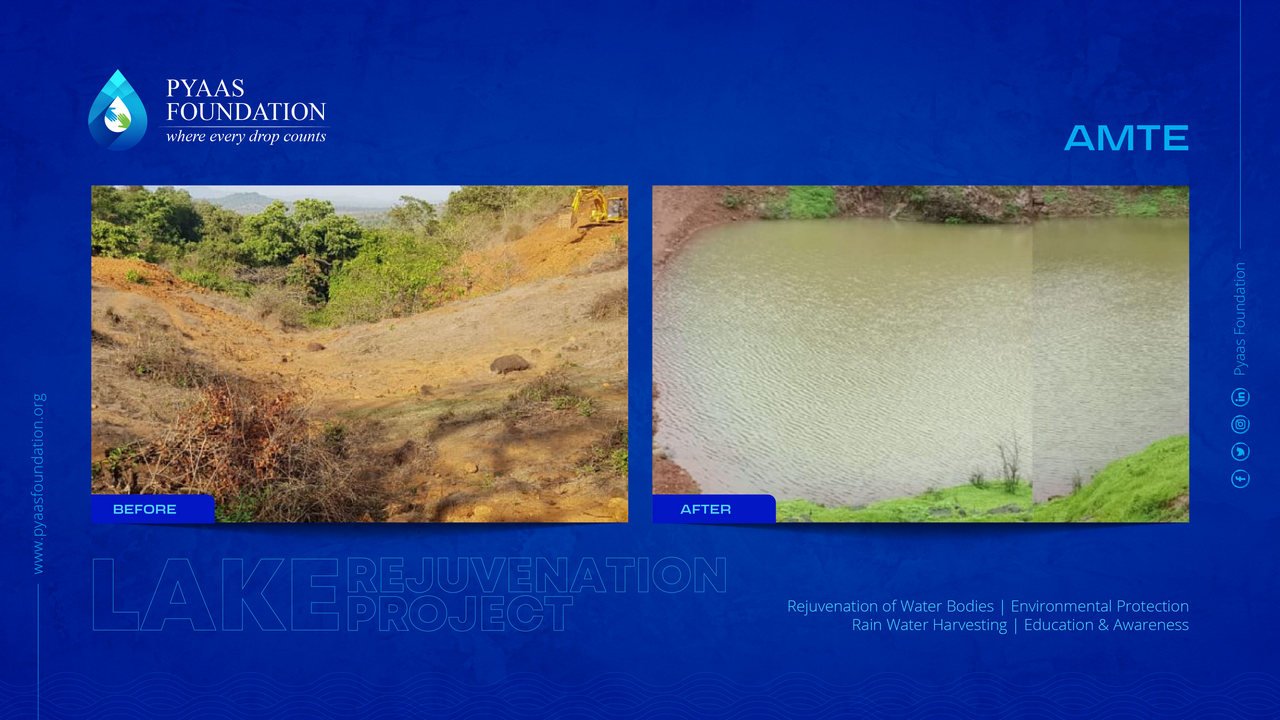
The Amte project involved de-silting a forest-fringe water body that had been neglected for decades. Special care was taken to maintain the natural contours of the land while expanding the water-holding capacity of the lake.
Problem
Despite being in a high-rainfall zone, Amte suffered from “water poverty.” The silted lake could not hold enough water to last through the dry season, forcing villagers to travel long distances for water and causing wildlife to stray into human settlements in search of hydration.
Our Solution
We focused on “Deep-Bed De-silting,” removing layers of clay that were preventing water from soaking into the ground. We also reinforced the natural spillways to ensure that the lake could safely handle heavy monsoon overflows without causing soil erosion in the surrounding areas.
Impact / Result
- Wildlife Support: The lake now serves as a perennial watering hole for local forest animals, reducing human-wildlife conflict.
- Village Self-Sufficiency: The village is now water-secure, with enough storage to meet drinking and domestic needs year-round.
- Soil Conservation: The strengthened bunds have stopped the erosion that was previously stripping the area of its fertile topsoil.